ABA (Applied Behavior Analysis)
ABA teaches a skill in small steps and practices it with clear feedback. It helps with communication, daily routines, and behaviors that get in the way at home or school.

Children from hard places often need additional supports and services that many caregivers have never heard of. Therapeutic professionals can help a child build coping skills, manage behaviors, improve regulation, and process big feelings. These services don’t just support the child—they also lighten the load on you and your family. Explore the different types of therapy and everyday nutrition ideas that can come together as a more holistic approach to caring for a child in foster or kinship care.
Common supports for children in foster and kinship care. A child may need one of them, several, or none.
ABA teaches a skill in small steps and practices it with clear feedback. It helps with communication, daily routines, and behaviors that get in the way at home or school.
A behavior aide is a trained adult who works with a child during the day, often at school or at home. It helps the child practice calming down, sticking with a routine, and getting through the harder parts of the day.
Occupational therapy works on the skills a child uses to get through an ordinary day, including sensory needs and self-care. It helps with dressing, handwriting, feeding, and handling sounds, textures, or busy places.
Speech therapy supports how a child understands language and how they speak or communicate in other ways. It helps them follow what people say and share what they need.
Physical therapy focuses on strength, balance, and how a child moves. It helps with walking, coordination, stamina, and motor skills that are slow to develop.
Trauma-informed therapy, including cognitive behavioral therapy (CBT), treats big reactions as something hard experiences can shape. It helps with worry, sleep, strong feelings, and feeling safer with caregivers.
Ask the child’s caseworker or the child’s Medicaid plan about providers who accept state insurance and may travel to school or home.

Many children entering care have been eating mostly highly processed foods. Improving the overall quality of their food — more protein, vegetables, and healthy fats, and fewer sugary drinks and ultra-processed snacks — can support energy, mood, and behavior for some children.
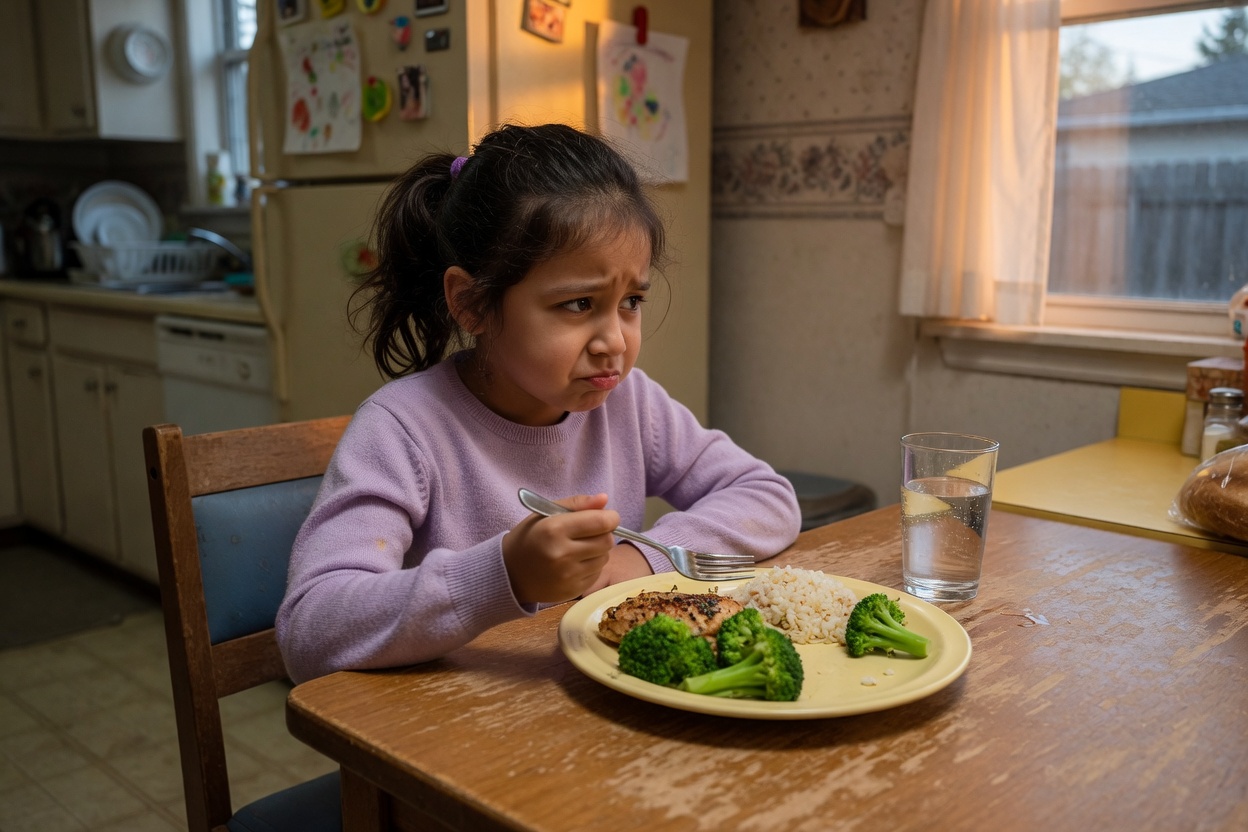
Many children need time to adjust to new foods. Expect swings in taste and preferences as they are exposed to more nutritious options. It can help to be flexible at first and use simple negotiations. Offer a favorite chip with grilled chicken, or a small cup of ice cream if they try their broccoli. As the child gets used to the new foods, slowly reduce those incentives so the healthier options become more normal. Focus on progress over perfection, especially in the early weeks.
Big behavior is often a body that cannot settle yet. A sensory toy gives that body a steady kind of input — pressure, a little movement, or something safe to chew, hold, or watch — so the feeling has a place to go. For a child in foster or kinship care, that can matter in the moments that tip them over: the car ride, coming in from a visit, a loud store, or homework when sitting still feels impossible.
Deep pressure, from a weighted lap pad, a weighted animal, or a stretchy body sock, can help a restless or shut-down body feel more grounded. A seat that wobbles a little can keep a child at the table instead of pacing. Chewelry, a quiet fidget, or a slow sensory bottle can occupy the mouth, hands, or eyes while you stay close. Headphones can turn down a room that is simply too loud. Keep the tool where the hard moment usually happens, and notice what the child actually reaches for. These toys do not replace a therapist or a calm adult. They give you something practical to try while the body comes down.
The shop lists simple sensory tools for these moments.